Serving Riverside, CA and surrounding areas.(951) 584-0685
Riverside Concrete Pro

Riverside Concrete Cutting, Coring and Trenching, Planned From a Scan

Trenches, doorways, sleeves and sawn joint grids, all of it taken out of concrete that is staying. On a lot this old Riverside Concrete Pro scans the line first, then prices from what comes back.

Google reviewsFacebook reviewsBetter Business Bureau reviews5.0 Stars Rated by our customers · Google, Facebook and the BBB
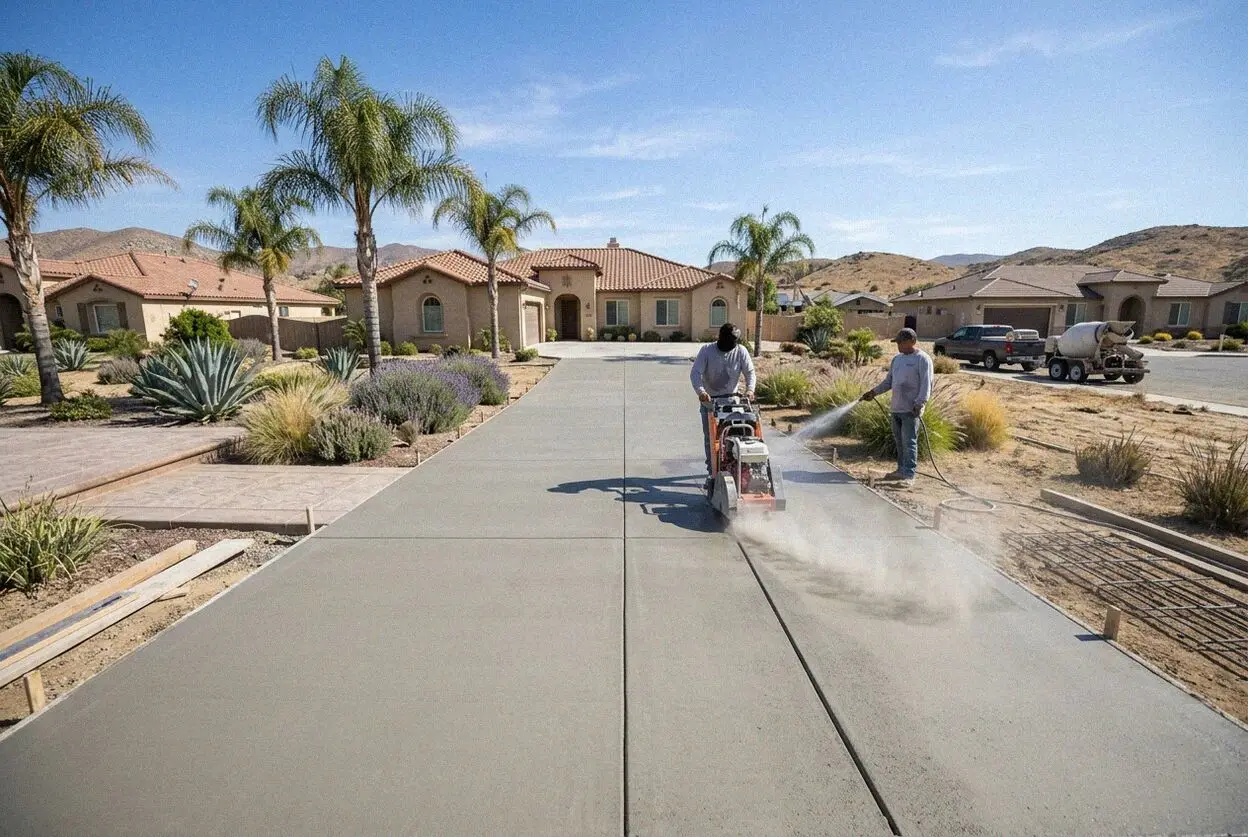
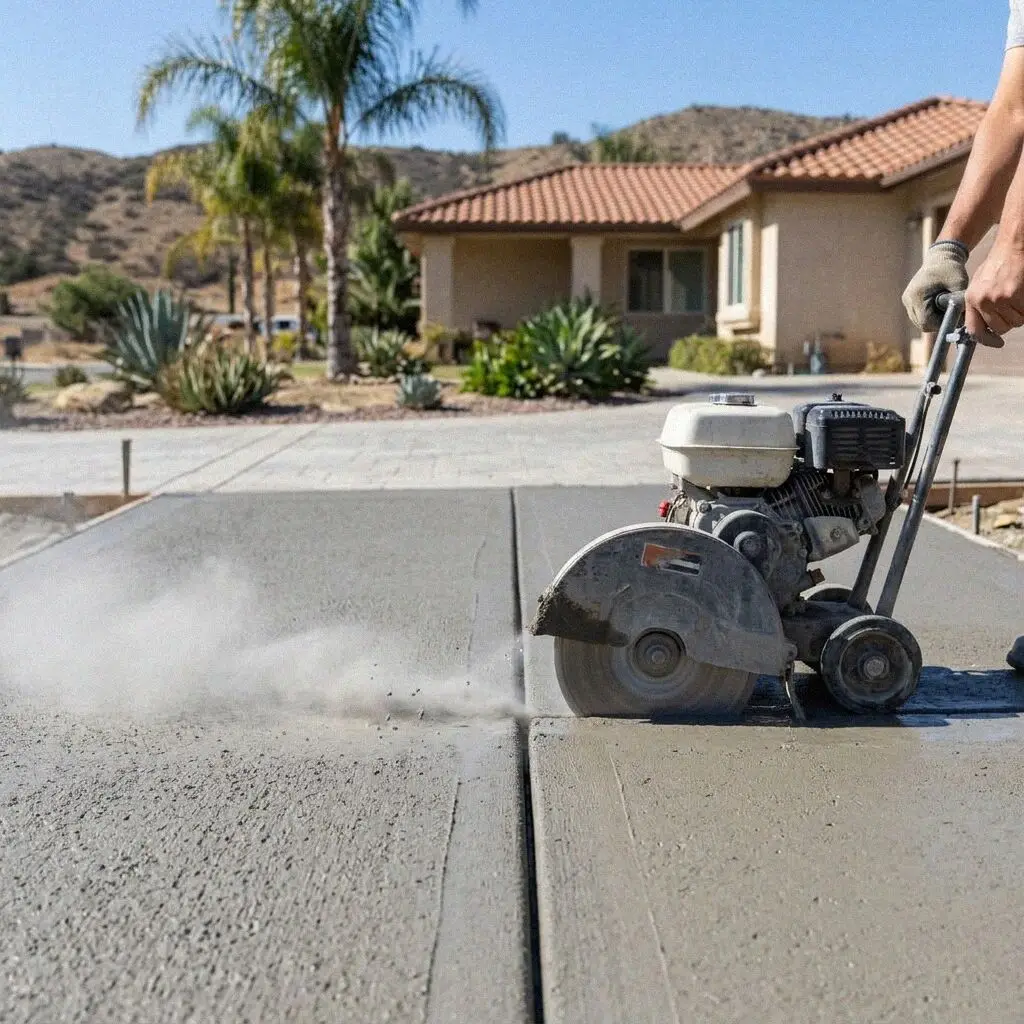
Diamond saw opening a doorway in a concrete wall in Riverside
Crew lifting a sawn concrete section out of a Riverside floor

Concrete taken away, not poured

Why a Riverside Cut Starts With a Scan, Not a Tape

A saw is bought for what it leaves behind. Breaking concrete out is quicker and cheaper, and it is the right call when all of it is going; sawing is what you pay for when the panels either side, the floor next door or the wall above have to come through the job untouched. That trade-off is settled before anything else on the estimate, and it is the one question worth asking on the phone.

Riverside Concrete Pro has worked on this city's concrete since 2021, and Marco Delgado spent 15 years on the Inland Empire crews before that. Cutting arrives in two shapes. A house is being changed, a waste line has to cross a finished floor, a doorway goes through a footing wall, one bay of a garage comes out on its joints. Or a business cannot stop, and a trench, a pit or a row of bollard cores has to happen between shifts and be gone by morning.

This is licensed C-8 Concrete work, the classification the California Contractors State License Board issues for it, and the machines carry liability insurance on every job. Cutting is on no exempt list anywhere, so the counter is asked, not assumed past. Where an opening takes load, a footing, a bearing wall, a structural slab, a stamped drawing of what picks it up goes in at Building & Safety, City Hall, 3900 Main Street, and props stand until an inspector has been.


What ends up in a line

Four Things in a Riverside Slab That Nobody Comes to Mark

The lateral past the meter

A DigAlert ticket gets at least two working days of notice, and its members paint the services they own, which stops at the meter. Water, sewer, gas and power from there into your building are yours, and nobody is coming out to mark them.

Grove pipe, cut and left

The Gage Canal reached Arlington Heights in 1889, and the groves it watered were piped and standpiped through the sixty years before streets went in over them. Where a grove became lots the distribution line was cut at the main and abandoned where it lay.

Strand in the eastern tracts

Where arroyo clay runs past an expansion index of 20 the engineer often answers with a post-tensioned slab. Strand inside one is tensioned days after the pour and anchored out at the slab edge, so cutting a single wire unloads it end to end.

The trench before this one

A service replaced is rarely a service removed. An old clay sewer, a dead gas run, the conduit to a garage demolished in 1968, all of it stays exactly where it was laid, and none of it appears on the drawing the current owner was handed at closing.

Inside every figure

Eight Things Every Riverside Cutting Figure Carries

Eight items, all in the figure from the start. Three of them happen before a blade is even fitted, which on a cutting job is where the money goes right or wrong, and the last two decide what the next trade finds waiting.

Two days' notice given

A DigAlert ticket goes in for anything that opens ground, and the marks are down before a machine is unloaded.

Radar over the route

One pass each way across the painted line, reading bar, mesh, conduit, pipe, voids and tendons through the surface.

Depth taken at an edge

Measured off an exposed edge or a pilot core, since a disc will reach a little under half its own diameter.

Water fed at the blade

Every saw and bit runs an integrated feed, the silica control Cal/OSHA names for this equipment in Title 8.

Slurry lifted to a drum

Cutting water turns strongly alkaline and hardens wherever it settles, so it is lifted as it appears and drummed.

Load picked up first

Props go in under anything bearing on the line and stay there until a header sized by an engineer has taken it.

Cores off an anchored base

The bit runs on a bolted or vacuum base rather than in the hands, so the sleeve is round, plumb and to size.

Measured against the paper

The finished opening is checked for size, square and plumb against the estimate before anybody signs it off.

When the scan finds something

Four Answers When a Riverside Scan Finds Something

A scan that comes back empty is the rare one. Much more often something sits on or beside the painted line, and what happens next turns on which of these four answers your opening can take.

OptionWhat movesWhat stays wholeTime it addsRuled out when
Shift the lineThe route, by a foot or twoWhatever the radar found, untouchedMinutes, while the paint is still wetThe fitting has to land on one spot
Core it, not trenchA hole the width of a bit, not a stripEvery joint and panel around itHours, and no repour to cureA gravity line has to fall across the room
Open a window firstA small opening straight over the doubtThe buried service, seen and left wholeHalf a day of digging by handThe reading is already unambiguous
Isolate and rejoinThe service itself, cut and remadeThe route exactly as it was drawnA shutdown booked with another tradeIt is a live main you do not own

Three of them cost hours. The fourth costs a shutdown arranged around another trade, which is why it is chosen on the estimate visit and never on the morning.

Ground radar marks painted across an old concrete floor in Riverside

Under an old lot

The Concrete Riverside Cuts Into Was Poured in Layers

This city has been dug over without a break since 1870 and very little of it was written down. That is why a cut here opens with a scan rather than a tape.

West of downtown, the Wood Streets, Casa Blanca, the Eastside, the frontages off Victoria Avenue, the flatwork is pre-war and went down in installments. Four inches on graded dirt with no mesh and no bar, a garage apron added in the fifties, a rear slab in the seventies, each butted to the last at a cold joint. A saw crossing those lines meets three concretes and three thicknesses inside eight feet, so depth is proved at more than one point and the machine picked for the worst of them.

East of the 215 the record improves and the risk changes shape rather than going away. Canyon Crest, Mission Grove and Orangecrest went up from the 1990s on engineered pads, so a plan set exists and the floor is one pour over a signed-off base. What those floors may hold instead is stressed strand, tensioned to roughly 33,000 pounds a tendon, four fifths of the load the wire would fail at, and gripped at the slab edge. Nothing there is cut or cored until the runs are painted.

How the work runs

From the Ticket to the Handover on a Riverside Cut

Five stages, and they run in that order on every job. A blade appears at the fourth of them; by then the notice has been served, the route has been read back to you, and the question of whether the city has to see the job is answered in writing.

1

Notice in, line painted

The ticket goes to DigAlert, then the route is measured and painted at full size on the concrete and walked with you.

2

Scanned, then read back

Radar over the paint, then a plain account of what came back and whether the opening has to move to clear it.

3

The structural answer

If the opening takes load off something, you hear it on day one, then it is drawn, stamped and over the counter before a date is held.

4

Propped, sheeted, sawn wet

Props under the load, floors sheeted along the route out, then the saw follows the paint in sections light enough to sling.

5

Cleared and handed back

Rubble loaded out, cut faces washed down, floors mopped along the barrow route, and the keys back the same day.

How the figure is arrived at

What Actually Sets a Riverside Cutting Figure

Length, depth and the number of corners give an opening its base figure, and that much is arithmetic anybody could do. The rest is what the radar makes us work around, plus how much of a house has to be sheeted while a wet saw is running.

How thick, and how steeled

One pass does a house floor. A shop slab takes several, and past the reach of a disc the opening becomes two cuts met in the middle.

What the radar sends us round

Bar on close centers wears segments off a blade. Strand stops the job until it is painted, and a live lateral moves the line.

Whether load sits on the line

If the opening carries anything, a stamped detail, propping and an inspection join the job. If it carries nothing, none of that is priced.

How far the water has to go

Where the rig can park decides the day. Water in and slurry out on a short hose is quick; up a stair or through a house is hours of it.

A cutting figure is never written from a photograph. The notice, the scan, the measuring and the writing are one free visit, and a date follows the number. (951) 584-0685 or send us a message.

Have the Line Scanned Before It Is Cut in Riverside

Send the form or ring, and the call back comes within 1 business day. On the visit the depth is measured, the route is scanned, the opening is painted at full size on your own concrete, and you are told plainly what the city will want to see. No charge.

Request a Free Estimate

Written on site · No obligation

By submitting, you agree to our disclosure and consent terms, including being contacted by Riverside Concrete Pro.

Reviews

Three Riverside Openings and What They Found

One scan, three different findings: a grove pipe under an old laundry floor, a footing wall that carried nothing, and a warehouse slab that had to stay in use. Google, Facebook and the BBB.

Google review

“Our place in Casa Blanca is from the twenties and we wanted a floor drain in the laundry. The scan turned up an old iron grove pipe running straight under where we had chalked it, so the core moved about eighteen inches and went in the same morning.”

Marisa Q. of RiversideCored drain through an old house floor · Google · 2026
Facebook review

“Twenties house in Magnolia Center and we wanted the back bedroom knocked through. The wall under it turned out to be carrying, so nothing happened until a stamped drawing had been over the counter and the props were standing. Two days of sawing, and the opening is dead square.”

Tri N. of RiversideDoorway sawn through a footing wall · Facebook · 2026
BBB review

“We lease a cold-storage unit off Sycamore Canyon Boulevard and needed eight bollards at the dock door without losing a shift. They scanned around the rack feet, drilled between the bars on a vacuum base and took the water up at the bit. Trucks were loading again that afternoon.”

Zaven H. of RiversideBollard cores in a warehouse floor · BBB · 2025

FAQ

Eight Questions Asked Before a Riverside Cut Is Booked

Eight things people want settled before they let a blade near a floor: who marks what, who has to be told, how far a saw reaches, and what a slab is like once a piece of it has gone.

(951) 584-0685
  • Can you find a pipe nobody has a record of?

    Usually. Ground-penetrating radar reads bar, conduit, pipe, voids and tendons off the surface without opening anything, and it does not care who owns what it finds, which is the point here, because the lines that catch people out on old lots in this city are precisely the ones no utility holds a map of. A pass takes under an hour, and it normally moves an opening rather than canceling one.

  • Who marks what is buried before a trench is cut?

    DigAlert does, for the services its member utilities own, on at least two working days of notice, and those marks stop at the meter. Everything from the meter into your building is private: the water run, the sewer lateral, the gas line, the feed out to a detached garage. Those are found with radar or not at all, and on a lot laid out before the war there are usually several.

  • What has to be filed before an opening is cut?

    Any that alters what carries the building. An opening through a footing, a bearing wall or a structural slab takes an engineer's detail, a filing at Building & Safety, and an inspection while the props are still standing. Cutting is on no exempt list, so smaller work goes over the counter rather than past it. A trench crossing the public walk or the parkway is Public Works and an encroachment permit.

  • Does a house of the 1990s have strand in its floor?

    It might, and it is cheap to settle before a drill turns. Where an expansion index over 20 pushed the engineer toward a post-tensioned design, the floor works through greased strand rather than loose bar, and nothing about that is visible from above. A warning stamped near the garage door is common but well short of universal, so the slab gets scanned rather than trusted. Ten minutes of radar settles it.

  • How deep will one pass of a saw actually go?

    A little under half the blade diameter, that one ratio decides every machine on the job. Twelve inches into a floor is what a walk-behind manages; a wall saw running on a bolted track takes roughly twice that from a single face, and past it a wall is opened from both sides and the cuts met in the middle. Core bits are the exception, at 1 to 24 inches across and no real limit on depth.

  • Can a floor poured without joints be given some?

    Yes, while the floor is still sound and flat. A retrofit grid goes in at one quarter of the slab's depth, laid out so no panel measures more than about 36 inches across for each inch of that depth, roughly a dozen feet apart on a four-inch bay. Shrinkage then goes where the saw put it. Once a slab has already cracked and dropped, lines will not undo that.

  • Is a wet saw a problem inside an occupied house?

    Less of one than a dry saw. Cal/OSHA section 1532.3 sets an eight-hour limit of 50 micrograms of respirable silica per cubic meter and names integrated water delivery as the control for saws and core rigs, with respirators added for handheld saws used indoors. The water is the trade-off: it comes back as slurry, so it is vacuumed at the blade, floors are sheeted, and none of it reaches a drain.

  • What holds the floor up while a piece is out?

    Whatever the engineer's detail says, standing before the blade starts. A slab on ground carries nothing but itself, so a bay lifted out of one leaves the rest as it was, and the sawn edges are doweled when the strip is poured back. A suspended floor or a wall is another matter: the load goes on props first, then onto a header sized for it, and is released only once an inspector has seen the work.

Service area

Cutting and Coring Out to 20 Towns From Riverside

The 20 towns we cover sit across 2 counties and the saws reach all of them. What travels with the crew everywhere is the scanner, since no floor in any of those towns gives up what is inside it to somebody looking at it.

Show All Areas We Serve

Get your Riverside cut scanned this week

Tell us where something has to get through the concrete, and what it is. Somebody rings back within 1 business day, the notice goes in, and the scan and the written figure land on one free visit.